



Table of Contents
- How to Review Vintage Ski Goggles Before You Buy
- Vintage Ski Goggle Restoration: What Is Worth Fixing
- How to Replace Foam on Old Ski Goggles
- Best Practices for Storing Snow Goggles
- Cleaning Lenses and Frames Without Causing Damage
- Displaying and Wearing Vintage Goggles Today
- Frequently Asked Questions
Last Updated: 16 September 2026
How to Review Vintage Ski Goggles Before You Buy
Vintage ski goggles are collectable eyewear from skiing's earlier decades, valued for their lens shapes, frame colours and the stories they carry from the slopes. At I Dream of Snow, we've handled enough pairs to know that a careful review before you buy saves you money, disappointment and a drawer full of unusable goggles.
The single most common mistake is buying on looks alone. A pair can photograph beautifully and still be unwearable once it's in your hands.
Below, we'll show you exactly how to inspect a pair, what restoration is worth your time, and how to keep a vintage ski goggles collection in display-worthy condition for years.
Checking Lenses, Frames and Strap Elasticity
Start with the lens, because it's the hardest part to fix and the most expensive to replace. Hold it up to a light source and look for scratches, cloudiness or separation between the lens and any inner coating.
Frames come next. Flex them gently. Old plastic can become brittle with age, and hairline cracks around the lens groove often spread once the goggles are worn.
Then test the strap. A perished elastic band that has lost its stretch is a warning sign the whole pair has been stored poorly.
- Lens: scratches, crazing, delamination, discoloured tint
- Frame: cracks at the lens groove, warping, missing clips or vents
- Strap: elasticity, fraying, rusted or bent buckles
- Foam: crumbling, hardened edges, gaps where it meets the frame
Spotting Authentic Pairs Versus Retro-Style Copies
Authenticity comes down to construction details that copies rarely bother to replicate. Genuine older goggles tend to show uneven, hand-finished seams, period-correct hardware and a weight that feels denser than modern moulded plastic.
Retro-style reproductions usually give themselves away with uniform, machine-perfect edges, modern logo fonts and synthetic foam that looks new. If a seller can't tell you where a pair came from, treat that as your answer.
Vintage Ski Goggle Restoration: What Is Worth Fixing
Restoration pays off when the frame and lens are sound and only the soft parts have failed. Foam, straps and buckles can all be replaced or repaired without touching the structural integrity of the goggle.
Where it stops being worthwhile is when the lens itself is damaged. A cracked, clouded or delaminating lens is rarely fixable at home, and sourcing a matching replacement for an older model can take months.
A simple rule helps here. If the frame holds its shape and the lens is clear, restore. If either fails, keep the pair as a display piece rather than a wearable one.
Problem |
Fixable at Home |
Worth the Effort |
|---|---|---|
Crumbling foam |
Yes |
Almost always |
Stretched strap |
Yes |
Usually |
Minor frame scuffs |
Yes |
Yes |
Cracked lens |
No |
Display only |
Warped frame |
Rarely |
Display only |
How to Replace Foam on Old Ski Goggles
Replacing foam is the most rewarding repair you can do on old ski goggles, and it's simpler than most people expect. The foam is the soft seal between the frame and your face, and once it crumbles the goggles become uncomfortable and useless for wearing.
Work slowly and let the old adhesive tell you how it wants to come off. Rushing this step is how frames get scratched.
Choosing the Right Foam and Adhesive
Match the foam thickness to the original where you can, because a seal that's too thick will stop the goggles sitting correctly on the face. Closed-cell foam resists moisture better than open-cell, which matters if the goggles will actually be worn.
For adhesive, a flexible contact adhesive designed for foam and plastics holds up better than rigid glues that crack when the frame flexes. Apply it thinly to both surfaces, let it become tacky, then press the foam into place and hold it.
Best Practices for Storing Snow Goggles
Good storage is what separates a collection that lasts from one that quietly falls apart in a box. Light, heat and moisture are the three enemies, and they work slowly enough that damage often goes unnoticed until it's too late.
Keep goggles out of direct sunlight, which degrades foam and fades frame colours over time. A cool, dry cupboard beats a hot garage or an attic every time.
For display pieces, a soft cloth bag or a lined box prevents dust settling into the foam while still letting you enjoy the pair. If you're storing several, keep them separated so buckles don't scratch neighbouring lenses.
- Store away from direct sun and heat sources
- Use acid-free tissue or cotton cloth, not newspaper
- Keep straps loosely coiled rather than stretched
- Check stored pairs every few months for foam breakdown
Cleaning Lenses and Frames Without Causing Damage
Cleaning is where well-meaning collectors do the most harm. Harsh cleaners, paper towels and hot water will strip coatings and scratch lenses that have survived decades.
Use lukewarm water with a drop of mild soap, applied with a soft microfibre cloth. Wipe gently and avoid scrubbing at stubborn marks, which usually means the coating is already compromised.
For frames, a barely damp cloth is enough. Dry everything thoroughly before storing, since trapped moisture encourages mould in the foam.
Displaying and Wearing Vintage Goggles Today
There's no rule that says vintage goggles have to sit in a cupboard. Plenty of people wear them on the slopes for the look, and plenty more display them as part of a broader love of mountain culture.
If you plan to wear a pair, treat the foam and strap as consumables and expect to replace them periodically. If you plan to display them, mount them somewhere out of direct light and check them seasonally.
For snow lovers building a collection around alpine style, I Dream of Snow curates vintage ski apparel and equipment alongside new snow-themed homewares, and offers a personalised sourcing service if you're chasing a specific pair. Our sustainability guidance on reuse and repair aligns with how we approach every piece we sell.
An accessory like the Falls Creek Goggle Pouch makes a lovely companion piece to store your vintage goggles in when they are not on display.
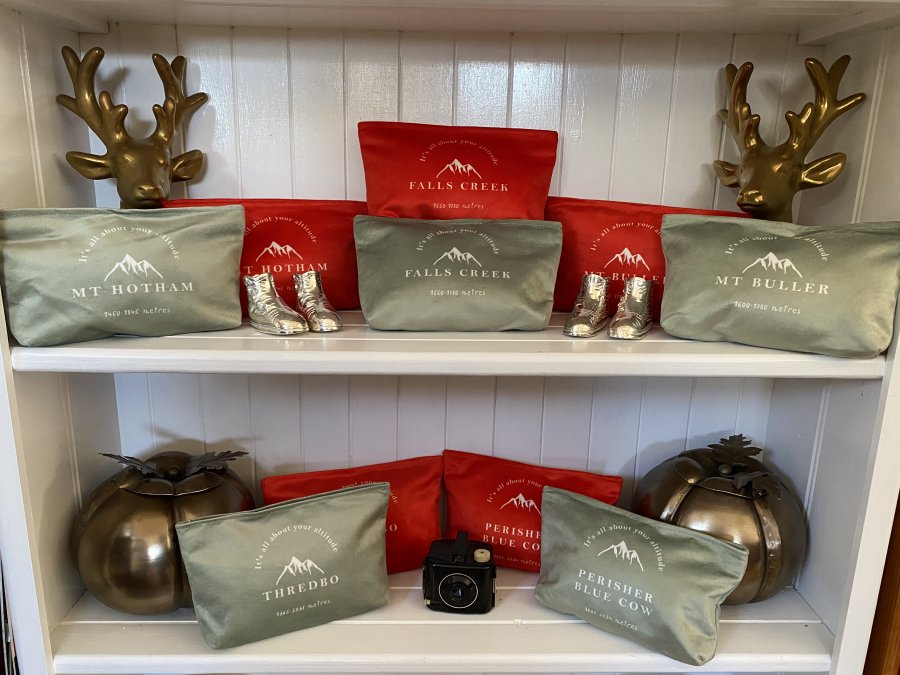
Thredbo, Perisher, Mt Hotham, Mt Buller and, of course, Falls Creek Goggle Pouches
Caring for vintage ski goggles is really a test of patience, and the pairs that last are the ones someone took the time to inspect, restore and store properly. If hunting down authentic pieces feels like a lot of work, I Dream of Snow can help: we offer a curated collection of vintage ski treasures, a personalised sourcing service for specific items, and a 14-day exchange window so you can buy with confidence. Get started with I Dream of Snow and build a collection that celebrates mountain culture all year round.
Frequently Asked Questions
Can you still use vintage ski goggles for modern skiing?
You can wear vintage ski goggles on the slopes, but check the lens first. Many older lenses lack modern UV ratings and impact resistance, so if the lens is cloudy, scratched or unmarked, treat the goggles as display or costume pieces rather than eye protection. If you plan to ski in them, replace the foam and strap, and avoid high-altitude days where UV exposure is strongest. A restored pair works best for gentle resort days, not backcountry trips.
How do I clean old ski goggle lenses without scratching them?
Rinse the lens under lukewarm water to lift loose grit, then wipe gently with a clean microfibre cloth and a drop of mild soap. Never rub a dry lens, because dust particles act like sandpaper. Avoid household glass cleaners, alcohol and paper towels, which strip coatings and leave scratches. For vintage ski goggles with delicate coatings, clean only when needed and pat dry rather than scrubbing. Store the goggles in a soft bag afterwards to keep the lens dust-free.
What should I look for when buying vintage ski goggles?
Check four things: lens clarity, frame integrity, foam condition and strap elasticity. A clear lens with no deep scratches is the hardest feature to restore, so pay most attention there. Frames should be free of cracks around the lens groove, and foam should feel spongy rather than crumbly. Stretch the strap gently to test for perishing. Ask for photos in daylight and close-ups of the foam edge, since that is where age shows first.
How do I store vintage ski goggles to prevent foam degradation?
Keep them away from heat, sunlight and damp. Foam breaks down fastest in hot, dry air, so store goggles in a cool cupboard rather than a garage or car. Place them in a breathable cotton bag or a padded case, and avoid sealing them in plastic, which traps moisture. If you display them, keep them out of direct sun because UV fades frames and dries foam. Check stored pairs every few months and air them briefly.
Are vintage ski goggles safe for high-altitude UV protection?
Most vintage ski goggles were not made to modern UV standards, so do not rely on them for high-altitude protection. UV intensity rises sharply with altitude, and older lenses may transmit more UV than they block. If you want the vintage look with modern safety, wear certified contemporary goggles underneath or reserve the vintage pair for low-altitude, overcast days. For glacier or spring conditions, use current eyewear and keep the vintage pair for display.