



Last Updated: November 16, 2026
Quick Summary
To evaluate vintage ski bindings, inspect each component for cracks, rust, worn toe and heel pieces, loose screws and brake function, then judge whether the binding is complete and compatible with your boot. Visual checks only show whether a binding is worth a technician's time; release performance must be confirmed by a qualified technician before any skiing.
- Age alone does not decide whether vintage ski bindings are safe to use.
- Check the housing for hairline cracks, brittleness and discolouration before flexing any part.
- Confirm the toe and heel pieces grip the boot and the heel locks with a firm click.
- Ensure both brake arms move freely and spring back fully.
- Only a qualified technician can confirm release performance; keep unverified bindings for display.
Table of Contents
- Why Vintage Ski Bindings Need a Closer Look
- Are Old Ski Bindings Safe to Use?
- How to Inspect Used Ski Bindings, Component by Component
- Understanding the Vintage Ski Binding Release Mechanism
- Checking Compatibility With Modern Ski Boots
- What a Skier Can Check Versus What a Technician Must Assess
- Deciding Your Next Step With Your Vintage Bindings
- Frequently Asked Questions
Why Vintage Ski Bindings Need a Closer Look
Vintage ski bindings are the metal and plastic release systems fitted to skis from earlier decades, and they are often the first thing a collector or enthusiast wants to examine. Vintage ski gear is often the subject of questions from collectors, and bindings tend to prompt the most questions. Our aim here is to help you judge the condition of vintage bindings with a clear, practical approach.
A quick look can be misleading. Bindings can appear intact while hiding worn springs, brittle plastic or corroded parts. Knowing what to check, and what to leave to a professional, keeps you on safer ground.
Here is what this guide covers:
- How to think about the age and safety of old bindings
- A component-by-component inspection routine
- How the release mechanism works in general terms
- Whether a binding suits modern ski boots
- What you can check yourself versus what needs a technician
- How to decide your next step
Are Old Ski Bindings Safe to Use?
Age alone does not settle the question. A binding's safety depends on its condition, its history and whether it still releases the way it was designed to. Some older bindings look sound, while others show visible wear that makes them unsuitable for skiing.
A cautious view is sensible. If you cannot confirm that a binding releases correctly, treat it as unsafe for active use. Use these signs as a starting point:
- Cracks or brittleness in plastic parts
- Rust or corrosion on springs, pins or metal plates
- Loose or stripped mounting screws
- Worn toe and heel pieces that no longer grip the boot
- Missing parts or replacements that do not match the original
If you see any of these, stop. Vintage bindings that are only for display are a different matter, and we explain how to decide that later in this guide.
How to Inspect Used Ski Bindings, Component by Component
Work through the binding in the same order every time, in good light, with the boot out of the binding. A consistent routine stops you from missing a part and gives you a fair basis for comparison if you are looking at several pairs. The checks below are visual and tactile only; they tell you whether a binding is worth a technician's time, not whether it will release correctly.
Housing, Cracks and Plastic Ageing
Start with the main body of the binding. Plastic degrades with ultraviolet light, heat and repeated flexing, and the damage is often internal before it shows on the surface.
- Look for hairline cracks radiating from screw holes, pivot points and the edges of the housing.
- Press gently on the housing and brake arms; a healthy part flexes and returns, while an aged part feels chalky or gives a dull crack.
- Check for discolouration, a white bloom on the surface or a sticky residue, all of which suggest the plastic has broken down.
- Inspect the area around the toe wings and heel lugs, where stress concentrates.
Watch out: do not flex a suspect part hard to prove it is sound. Brittle plastic can fail in your hand and turn a display piece into scrap.
AFD and Boot Interface
The anti-friction device, usually a pad under the boot toe, is central to how the boot slides out during a release. On vintage bindings it is often worn, polished or missing.
- Check that the AFD is present, flat and not glazed or gouged.
- Confirm the pad sits at the correct height and has not been compressed or replaced with a non-original part.
- Look at the boot sole itself: a worn or rounded sole changes the contact with the AFD and the toe and heel pieces.
- With the boot fitted, check for rocking, gaps or slop at the toe and heel.
Toe and Heel Pieces
The toe and heel pieces hold the boot and release it, so wear here matters more than cosmetic condition.
- Check that the toe wings close evenly and grip the boot welt without slipping.
- Confirm the heel piece locks with a firm, positive click and does not release under light hand pressure.
- Look for flattened, bent or gouged jaws and lugs.
- Check that the boot sits centred and that the forward pressure setting has not been altered.
Brakes
Brakes are often overlooked on vintage bindings, and a brake that will not deploy is a hazard on the snow.
- Confirm both brake arms move freely and spring back fully.
- Check that the brake retracts when the boot is fitted and deploys when it is removed.
- Look for bent arms, missing springs and cracked plastic housings around the pivot.
Screws, Mounting and Plates
Loose or damaged mounting hardware is one of the most common reasons an old binding fails.
- Check that every screw turns smoothly and sits tight without spinning.
- Look for stripped threads, rounded heads and rust bleeding from the screw holes.
- Confirm the binding sits flush on the ski with no gap or rocking.
- Inspect the base plates for cracks, corrosion and sharp edges.
Springs, Pins and Metal Parts
- Springs should look even, with no kinks, flat spots or heavy rust.
- Pins and hinges should move smoothly without grinding or sticking.
- Surface rust can sometimes be cleaned off, but pitting that has eaten into the metal means the part is compromised.
Record what you find for each pair. A written note of cracks, rust, missing parts and boot fit makes a technician's assessment quicker and gives you a clear basis for the decision in the next section.
Understanding the Vintage Ski Binding Release Mechanism
Bindings are generally designed to release the boot in a fall, so the skier is not held to the ski. The release is driven by springs and adjustable settings that respond to force applied to the boot. The exact design varies a lot between makers and decades, so the details are best learned from the manufacturer's documentation or a qualified technician.
Two points matter for a condition check:
- The release depends on springs, pivots and clamps working together. A fault in one can affect the whole system.
- A binding can look fine and still release poorly. You cannot judge release performance by eye alone.
Because of this, release force should not be tested at home on old bindings.
Checking Compatibility With Modern Ski Boots
Modern ski boots have different soles and shapes from older boots, so a vintage binding may not fit or hold a current boot properly. Check these points before you consider any use:
- Does the boot sole length and shape match what the binding was built for?
- Does the toe piece grip the boot's welt without slipping?
- Does the heel piece lock securely?
- Is there any gap or movement once the boot is in place?
If the fit is unclear, the binding is not a safe match. For more on gear that pairs well with vintage setups, see 10 Must Have Vintage Ski Accessories.
What a Skier Can Check Versus What a Technician Must Assess
You can do a lot of the visual work yourself. A technician should handle anything that affects release performance.
You can check:
- Visible cracks, rust and wear
- Loose or missing screws
- Whether parts look complete and undamaged
- Whether the screws and clamps move freely
A technician should assess:
- Release settings and release force
- Whether the springs and brake mechanism work correctly
- Whether the binding is still serviceable
- Whether any worn part needs replacing
Vintage ski goggles are another item where personal judgement has limits. If you are weighing active use, read Are Vintage Ski Goggles Worth It for Active Use? before deciding.
Deciding Your Next Step With Your Vintage Bindings
Once you have inspected the bindings, the decision should follow from what you found rather than from age alone. If you have decided to keep vintage gear, our practical guide to sourcing vintage ski equipment explains where to look next.
**1.
**2.
**3.
4. Has a qualified technician confirmed release performance? Visual checks cannot establish whether a binding releases within its designed range.
From those answers, four outcomes follow:
- Inspect further. If the binding is complete, compatible and shows only minor wear, book a technician assessment before any use.
- Have it professionally tested. If the binding is serviceable and the boot fits, a technician can test release performance and adjust settings.
- Replace the binding. If the binding is sound but incompatible with your boot, or no longer serviceable, a replacement binding suited to the ski and boot is the safer route.
- Retire it to display. If the binding is damaged, incomplete or unserviceable, keep it as a display piece rather than a skiing component.
Never use a binding for skiing unless a qualified technician has confirmed it is safe and releases correctly. When in doubt, keep it on the wall.
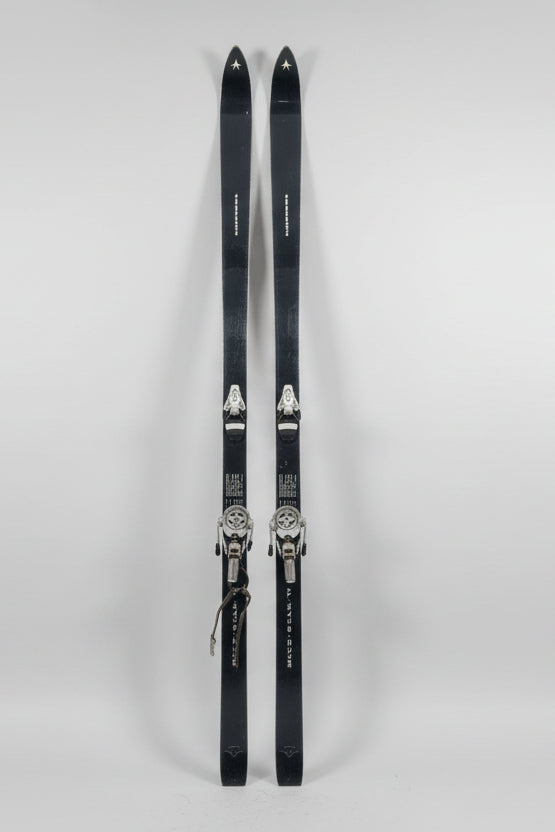
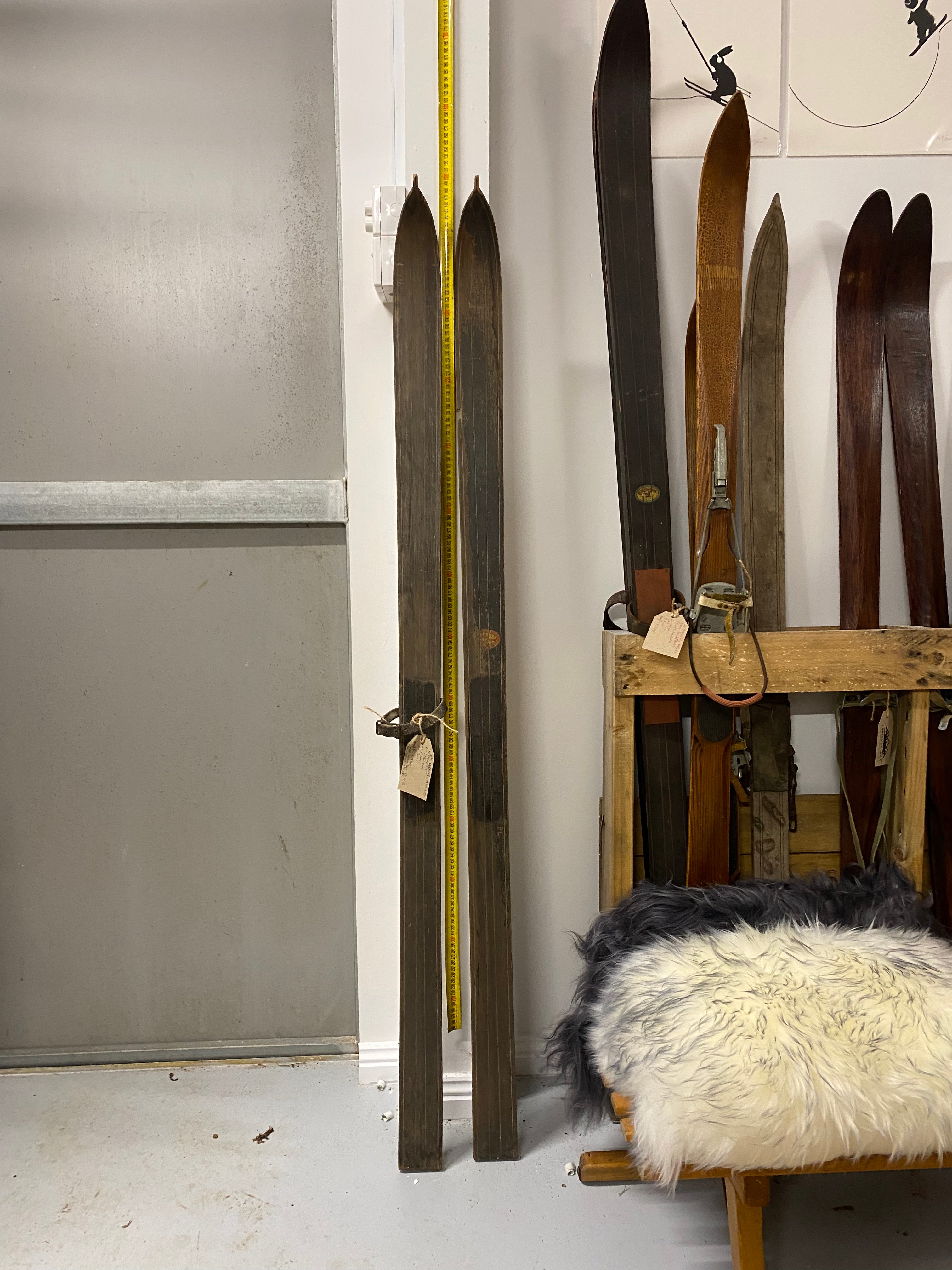
Our vintage skis, including the Vintage Kneissl Laminated Skis with Look Henrada Bindings at $259.95 AUD, are sold as decorative pieces only. The MW Vintage Wooden Skis 150cm at $499.95 AUD are also decorative.
Browse our full range at I Dream of Snow and find the vintage piece that suits your space.
| Question | If the answer is no | Outcome |
|---|---|---|
| Is the binding complete and free of structural damage? | Cracks, pitting, stripped screws or missing parts | Retire it to display |
| Does it fit the boot you intend to use? | Sole length, shape or AFD contact does not match | Replace the binding |
| Is the binding still serviceable? | Not supported, so it cannot be tested or adjusted | Retire it to display |
| Has a qualified technician confirmed release performance? | Visual checks alone cannot confirm release | Have it professionally tested |
BUTTON: Shop Vintage Ski Gear CARD_TITLE: Looking for vintage ski pieces? CARD_TEXT: I Dream of Snow sells curated vintage skis and snow treasures for display.
Frequently Asked Questions
How can you tell whether vintage ski bindings are in good condition?
Start with a visual check of the plastic housings for cracks or brittleness, the metal parts for rust and corrosion, and the mounting screws for looseness or damage. Look at the toe and heel pieces for wear and confirm the brake arms move freely. A clean visual check is a useful first step, but it cannot confirm that the release mechanism works. For that, a qualified ski technician should carry out a functional release test before any vintage binding is used on snow. Keep a written note of what you found so the technician can focus on the areas of concern.
Are old ski bindings safe to use?
Age alone does not settle the question, but older bindings are more likely to show brittle plastic, corrosion and worn release components. Visible deterioration is a warning sign, and so is any binding whose release performance cannot be confirmed. Because a failed binding can cause injury, we recommend that vintage bindings are checked by a ski technician before they are used on snow. If a technician cannot confirm correct release settings or the binding's serviceability, retire it.
Can ski bindings deteriorate while in storage?
Yes. Damp conditions can cause rust on metal springs and screws, and heat or sunlight can make plastic housings brittle over time. Bindings stored in a garage or shed are particularly exposed to these changes. Even if a binding looks sound after storage, the visual check should be followed by professional assessment before use. Store bindings somewhere dry and stable to slow deterioration.
Can old ski bindings be mounted on modern skis?
Mounting an old binding on a modern ski is not a simple swap. Mounting positions, screw patterns and boot compatibility all need to be checked, and the binding must still be serviceable. A ski technician should confirm both the binding condition and the fit with your ski and boot before any mounting work is done. If you are unsure, ask a technician to assess the combination rather than mounting it yourself.
