



Last Updated: 16 November 2026
Quick Summary
Vintage ski gloves are second-hand gloves built from leather, wool and older synthetic insulations, chosen for their warmth and character. Check the insulation, seams and lining before buying, size them against your own hand, and add a thin liner if the loft feels thin.
- Wool stays warm when damp, which is why it appears in many mid-century gloves.
- Mittens keep fingers together and are the warmer choice on bitter days.
- Size up if you plan to wear liner gloves under a vintage pair.
- Dry leather gloves at room temperature, away from heaters and sun.
- A ten-second tap test shows whether the proofing has survived.
Table of Contents
- Why Vintage Ski Gloves Still Earn a Place on Cold Mountain Days
- Warm Ski Gloves for Cold Weather: What Vintage Pairs Actually Deliver
- Ski Gloves Versus Mittens: Choosing the Right Shape for the Conditions
- Ski Glove Sizing: Getting the Fit Right When There Is No Returns Label
- How to Care for Leather Ski Gloves: Cleaning, Restoring and Reproofing
- Assessing Second-Hand Condition Before You Buy
- Shop Vintage Gloves That Are Ready for the Mountain
- Frequently Asked Questions
Why Vintage Ski Gloves Still Earn a Place on Cold Mountain Days
Vintage ski gloves for cold mountain days are second-hand gloves built from leather, wool and older synthetic insulations, chosen for their warmth and character.
The appeal is simple. Older gloves were often cut from full leather with generous cuffs and thick pile linings, and many people find that a well-kept vintage pair keeps hands warm.
There is a catch, though. Not every old glove is mountain-ready, and the honest ones need care and a realistic sense of their limits.
If you are weighing up the wider case for buying pre-loved snow gear before committing to a pair, our guide to why choose vintage ski apparel sets out the reasons in full.
Warm Ski Gloves for Cold Weather: What Vintage Pairs Actually Deliver
Warm ski gloves for cold weather depend on three things: the insulation inside, the barrier against snow, and how well moisture escapes. Vintage pairs can deliver on the first two, and on the third only if the materials have survived intact. The useful skill is reading a glove's construction rather than trusting its age or its looks.
Older gloves commonly used wool, pile fleece, felt, or thin synthetic interlinings. Wool stays warm when damp, which is why it appears in so many mid-century gloves. Pile fleece traps a lot of air for its weight but packs down over decades.
Layering matters as much as the glove itself. A thin liner glove under a roomy vintage shell traps a pocket of warm air and gives you a dry layer to change into. Our article on how to layer retro ski wear for real warmth explains where gloves sit in the system.
Insulation Types You Will Find in Older Gloves
Expect wool, pile, felt and early synthetics. Wool and pile hold warmth best when dry and forgiving when slightly damp. Early synthetic interlinings are effective but flatten over the decades, so squeeze the glove gently: if it feels thin and flat, treat it as a shell and add a liner. A quick pinch test at the fingertips tells you more than any label: if you can feel your own fingers through the lining, there is little loft left.
Waterproofing, Breathability and Moisture Management
Most vintage gloves are water-resistant rather than waterproof. Treated leather sheds snow but soaks through in wet slush. Breathability comes from the leather itself and any membrane, which may have aged. Dry hands come from managing sweat: take gloves off at lunch, turn them inside out, and never dry them on a radiator.
A simple field test before you commit to a pair: hold the glove under a running tap for ten seconds, then watch the inside. Beading on the surface is a good sign; darkening leather or dampness at the seams means the proofing has gone. Reproofing can restore water resistance to leather, but it cannot repair a failed membrane or a split seam.
When Vintage Warmth Is Not Enough
Vintage gloves suit cold, dry mountain days and moderate exertion. They are a poor choice for wet snow, freezing rain, long stationary periods or anyone with poor circulation, because once the insulation is damp it stops doing its job and there is no modern membrane to stop the heat loss. A common pattern among experienced skiers is to carry vintage leather gloves as a dry-day pair and a modern technical glove or mitten for wet weather and deep cold. Knowing which day you are heading into is the whole decision.
Ski Gloves Versus Mittens: Choosing the Right Shape for the Conditions
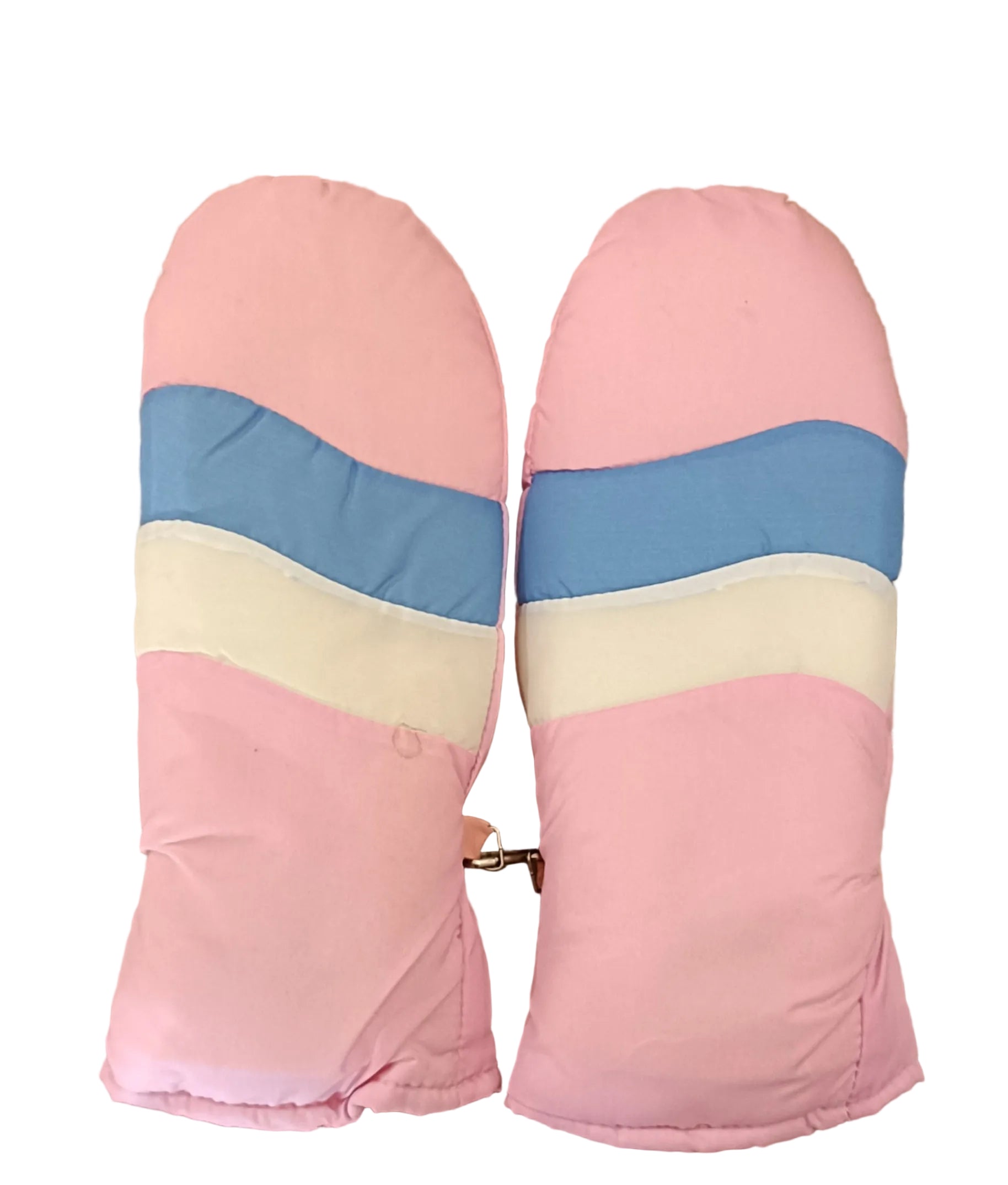
Ski gloves versus mittens comes down to dexterity against warmth. Mittens keep fingers together so they share heat, which makes them the warmer choice on bitter days. Gloves give you grip and hand movement for buckles, zips and poles.
For deep powder and long days on the mountain, many skiers wear mittens and carry a thin glove for fiddly tasks. For resort skiing where you are constantly adjusting gear, gloves win. If you lean towards mittens, our vintage Campri mittens show the shape in a striped, never-worn pair.
Three-Finger and Lobster Designs
Three-finger gloves, often called lobster mitts, split the hand into a thumb, an index finger and a joined middle-and-ring section. They sit between the two shapes: more warmth than a glove, more grip than a mitten. Vintage examples turn up occasionally and suit skiers who run cold but still want to hold a pole properly.
| Shape | Warmth | Dexterity | Best For |
|---|---|---|---|
| Glove | Moderate | High | Gear adjustments, resort skiing |
| Mitten | Highest | Low | Deep powder, extreme cold |
| Three-finger | High | Moderate | Cold days with active skiing |
Ski Glove Sizing: Getting the Fit Right When There Is No Returns Label
Ski glove sizing on vintage pairs has to be judged from measurements, not labels. Old sizing varies between makers and countries, and a faded tag tells you little. Measure your hand around the knuckles and compare it to the glove's stated width and length.
Fit should be snug at the wrist and roomy at the fingertips. You want a small air gap, not a tight squeeze. Cuffs need to sit over or under your jacket sleeve without bunching.
Vintage Sizing and Room for Liners
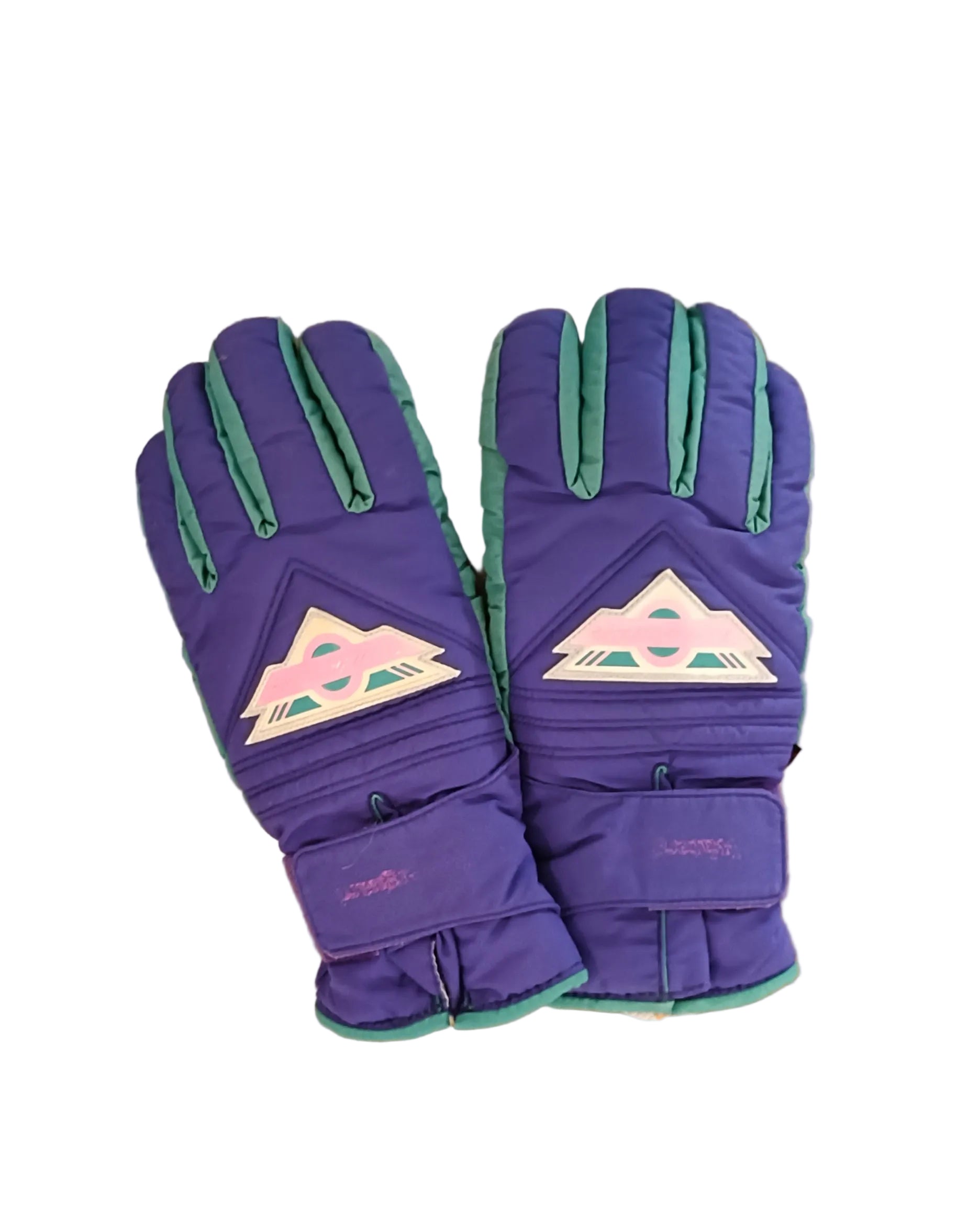
Size up if you plan to wear liner gloves. A vintage ladies large may fit a modern medium, so always check the listed dimensions. Our vintage Dynastar gloves are listed as a ladies large with leather palms and a Thinsulate interlining, which gives you a real example to compare against your own hand.
How to Care for Leather Ski Gloves: Cleaning, Restoring and Reproofing
How to care for leather ski gloves is mostly about patience: clean gently, dry slowly, and reproof before the leather dries out. Skip any of those steps and the leather stiffens and cracks.
- Brush off dry snow and grit with a soft brush
- Wipe the leather with a damp cloth and mild soap, never soak it
- Dry at room temperature, away from heaters and sun
- Apply a leather conditioner or wax while slightly damp
- Work wax into seams and the palm, then buff off excess
- Store flat or loosely stuffed, never crushed in a bag
Watch out: drying leather gloves on a radiator or in front of a fire can harden the hide and shrink the fit.
Assessing Second-Hand Condition Before You Buy
Assessing second-hand condition is where most buyers get caught out. Look at four things: the leather, the stitching, the lining and the closure. Small cosmetic wear is fine. Structural failure is not.
Check the palm for thinning and the seams for loose thread. Pull the lining gently to see if it is detached. Flex the cuff to test for stiffness.
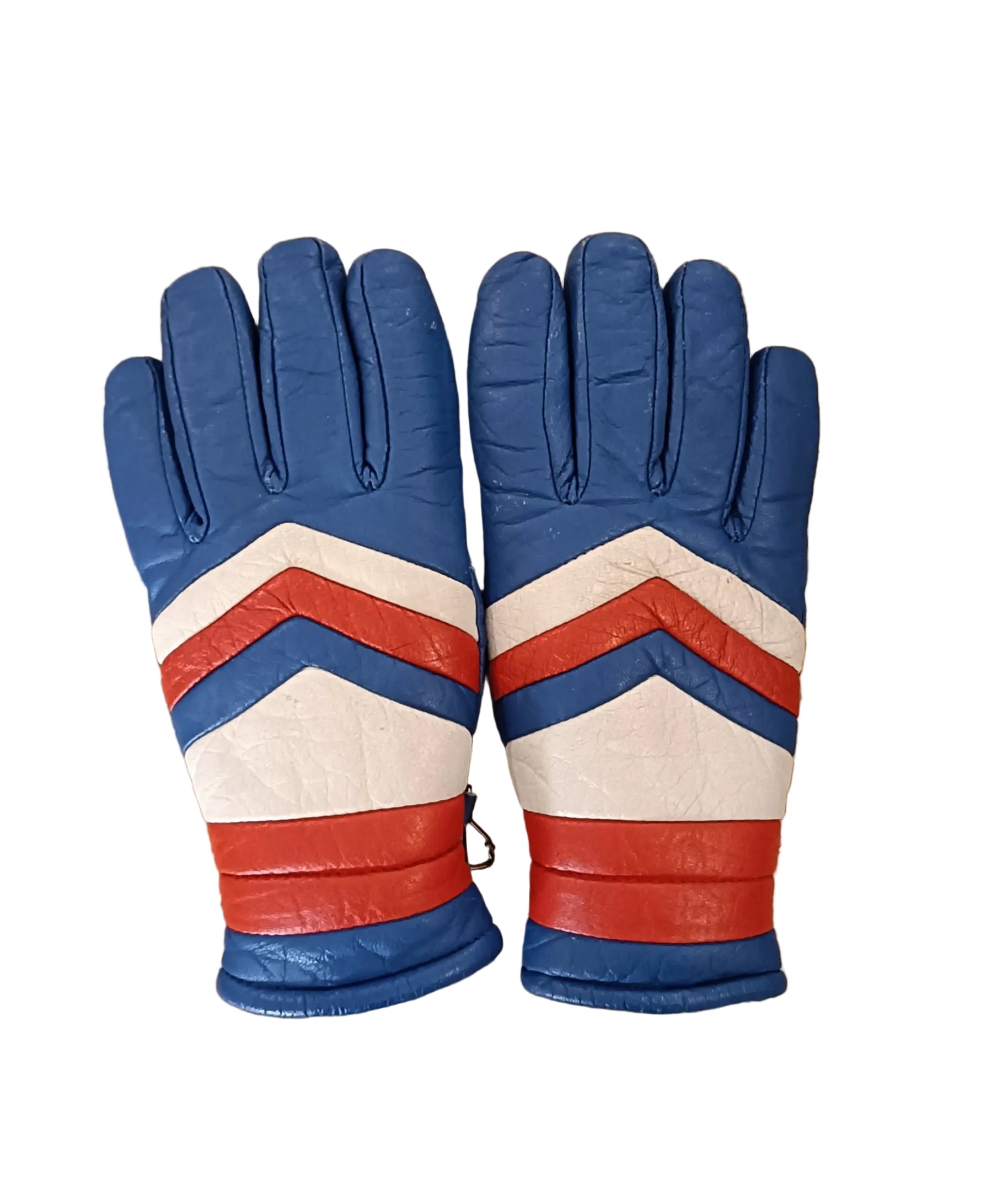
Ask whether the pair has been cleaned and whether any marks are disclosed. Our vintage blue, white and red leather gloves list light wear on the leather and note the dimensions, which is exactly the detail you want before buying.
Dating a Pair and Spotting Modern Retro Styling
Genuinely vintage gloves usually show their age in the details. Look at the label: older labels tend to be woven rather than printed, use older brand marks, and often carry a country of origin rather than a size in modern alpha terms.
None of that makes them bad gloves, but it does mean they are not vintage, and they should be judged as current gear rather than as a piece with decades of use behind it.
The Condition Checklist That Actually Matters
Work through these in order, because a failure early on usually means the pair is not worth the rest of the inspection:
- Leather: press the palm and fingertips. Supple leather springs back; dry leather cracks or feels papery. Cracking at the flex points of the fingers is a disqualifier.
- Seams: turn the glove inside out if you can and look at the thumb crotch and the cuff join. These take the most stress and are the first to go.
- Lining: pull gently at the cuff. A lining that slides out or bunches means it has detached and will bunch around your fingers.
- Elastic and closures: stretch the wrist elastic and check the strap. Perished elastic and cracked plastic buckles are common and awkward to replace.
- Odour: a musty smell usually means damp storage, and damp storage is what degrades leather and lining together.
- Waterproofing: a ten-second tap test on the shell tells you whether the proofing has survived. Beading is good; darkening and damp seams are not.
Watch out: a pair that looks excellent on the outside but has a detached lining or perished wrist elastic will fail on the mountain, and neither fault is visible in a listing photo unless the seller shows it.
Sizing and Fit Before You Commit
Older sizing varies between makers and countries, and a faded tag tells you little. Measure your hand around the knuckles and compare it to the glove's stated width and length rather than trusting the label. A vintage ladies large may fit a modern medium, so always check the listed dimensions. Our vintage Dynastar gloves are listed as a ladies large with leather palms and a Thinsulate interlining, which gives you a real example to compare against your own hand.
Shop Vintage Gloves That Are Ready for the Mountain
The best vintage ski gloves for cold mountain days are the ones you have checked properly, sized against your own hand, and cared for before the first lift.
We hand-pick our pairs and describe their wear. Browse our collection of vintage gloves and mittens.
Cold mountain days punish the wrong gloves. If you want a pair that has already proven itself, I Dream of Snow curates vintage ski gloves with honest condition notes, clear measurements and a 14-day exchange window, so you can check the fit at home.
Frequently Asked Questions
Are vintage ski gloves warm enough for cold mountain days?
It depends on the pair. Many older gloves use Thinsulate, wool or acrylic insulation that still traps heat well, but the lining compresses and thins over decades. Check the label and feel for flat, clumped padding. A pair in good condition can handle typical resort days, especially with a thin liner glove underneath. For extreme cold or long days on the mountain, treat vintage gloves as a stylish mid-weight option rather than your only pair.
What should I check before buying vintage ski gloves?
Look at four things: the leather for cracking or stiffness, the stitching at the palm and thumb seam, the lining for holes or separation, and the cuff elastic. Ask for the label size and measured dimensions, since vintage sizing runs small. Confirm whether the waterproofing membrane is intact, and check for marks the seller has disclosed. A pair with light surface wear is fine; split seams or crumbling liners are not worth repairing.
How should ski gloves fit when you cannot try them on?
Ski glove sizing should leave about a centimetre of space past your longest finger and no tightness across the knuckles. Ask the seller for the measured length and width, then compare against a glove you already own. If you plan to wear liner gloves, size up. Remember that leather relaxes slightly with wear while nylon does not, so a snug leather pair will give a little over the first few days.
How do you clean and care for vintage leather ski gloves?
Wipe the leather with a damp cloth and a mild saddle soap, then dry away from direct heat. Apply a leather conditioner sparingly once dry to keep the hide supple, and reproof with a wax or leather-specific water repellent. Never machine wash or tumble dry vintage gloves, as heat breaks down the insulation and shrinks leather. Store them flat, fully dry, and check the seams before each season.
